
Is hydrogen the fuel of the future?

As a strategy for decarbonising industrial sectors and transport, green hydrogen is establishing itself as an essential pillar of the energy transition. But its large-scale deployment is being slowed down by issues of cost, infrastructure and the massive need for renewable energy supplies. In response to these challenges, initiatives to build a competitive, resilient and sovereign industry are multiplying rapidly.
Hydrogen has long fuelled hopes for a green revolution in our energy system. Indeed, its ability to store three times more energy than petrol, without direct CO₂ emissions, makes it an ideal candidate for transforming key sectors such as transport, industry and energy storage. All this is subject to the condition that it is sourced carbon-free, however. Although it is not an energy source comparable to coal or gas, current hydrogen (classified as grey) is an energy source mainly produced from the fossil fuels it is supposed to replace.
To play a key role in the energy transition, hydrogen must become decarbonised or "green", meaning produced through water electrolysis, powered exclusively by renewable energy sources. The challenge is significant because the electricity available at the European level is still largely carbon-intensive, and using it to power water electrolysis to produce green hydrogen generates even more CO2.
A strong political will
The production and use of green or decarbonised hydrogen are at the heart of national and European energy policies, which see it as a means to decarbonise their energy supplies but also to reduce their dependence on Russian gas. The European Union thus aims to produce 10 million tonnes of renewable hydrogen by 2030.
Even though this sector remains emergent, there has been a recent acceleration in the growth of projects, such as the Hy2Tech and Hy2Use industrial alliances. For its part, France is providing massive support to the sector, with its France 2030 plan, to the tune of 9 billion euros by 2030. The National Hydrogen Strategy1 aims for 6.5 GW of installed electrolysis capacity by 2030 in order to replace grey hydrogen and develop applications, particularly in heavy transport. Major industrial projects are emerging, but are struggling to reach critical scale. At the end of 2023, installed electrolysis capacity was only 0.03 GW, far behind the target of 6.5 GW by 2030.
Persistent barriers to the sector's take-off
Water electrolysis carried out using electricity supplied by nuclear, wind or solar energy is the most popular solution to date, as it does not emit any CO2. But it remains underdeveloped for several reasons: high cost, low yield, technologies far from industrial-scale maturity and an energy-intensive production requiring significant quantities of green electricity that few European countries produce. Its large-scale use therefore requires the massive deployment of new low-carbon electricity production capacities (such as nuclear reactors and wind farms).
Once produced, green hydrogen needs to be stored and then transported on-site, which requires the deployment of complex and costly infrastructure. Finally, being flammable, the use of hydrogen outside of an industrial setting raises numerous safety concerns. In France for example, hydrogen filling stations are very strictly regulated in order to reduce the risk of explosion or fires.
The future uses of green hydrogen
The industrial sector remains the priority area of application for green hydrogen, with the dual objective to replace grey hydrogen—used mainly in oil refining or ammonia synthesis—and to decarbonise high carbon emitting industrial processes, such as steel and cement production.
In terms of seasonal storage of renewable energies, green hydrogen offers a solution to the challenge of intermittency. Through the power-to-gas-to-power process, surplus wind and photovoltaic production can be converted, stored for several months, and then reintroduced into the grid during periods of high demand, thus optimising the overall efficiency of the energy system.
In the field of transport, hydrogen presents variable potential depending on the modes of transport within which it is deployed. If buses are already running on hydrogen fuel cells and adapted tanks, the replacement of them caused by the rise of battery-powered electric cars leaves little room for hydrogen. It is actually in heavy transport that the use of green hydrogen seems more promising, however.
In aviation, hydrogen's high energy density works in its favour, but its significant volume whilst in the liquid state requires a redesign of aircraft structure. This is a challenge that Airbus and Safran are actively tackling as part of the ZEROe2programme, aiming for a commercial, hydrogen-powered aircraft by 2035.
As for the railway sector, the first hydrogen trains such as Alstom's Coradia iLint3have demonstrated the technical feasibility of the concept on non-electrified lines. But the hydrogen-railway ecosystem faces several constraints: high infrastructure costs, insufficient technological maturity and the still limited availability of green hydrogen. These obstacles have led several operators, particularly in Germany, to reconsider their initial investments in favour of alternative solutions.
Gambling that green hydrogen is a winning hand
Faced with international competition—particularly from the Chinese for electrolysis (70% of global capacity) and America—Europe needs to secure its sovereignty across the entire value chain, increasing its capacity for low-cost renewable electricity production, but also improving electrolytic yields and optimising storage and distribution infrastructures. These are major challenges that require coordination between public policies, private investments and scientific innovation.
The different hydrogen production techniques
- Steam reforming of natural gas
It is the most widespread technique, which consists of reacting methane with water to obtain a mixture of hydrogen and carbon dioxide. The CO2 emitted can potentially be captured and stored to produce green hydrogen. - Electrolysis of water
Electrolysis allows water (H₂O) to be broken down into hydrogen (H₂) and oxygen (O₂) using an electric current. When powered by renewable electricity sources (wind, solar, hydroelectric), it enables the production of "green" hydrogen. This route is still not widespread because it is very expensive. - Gasification
Gasification allows the production, through combustion, of a mixture of carbon monoxide and hydrogen from coal or biomass, but it emits a lot of CO2.
DISCLAIMER :
This content, being of an advertising nature, has no contractual value. It is neither intended to provide an investment service such as investment advice, nor any related investment service, nor advice on arbitrage, nor legal, accounting, or tax advice from Société Générale Private Banking France (hereinafter "SGPB France"), which therefore cannot be held responsible for any decision made by an investor solely based on its content. SGPB France does not undertake to update or modify it.
Before making any investment decision, please review the detailed documentation of the service or product considered, notably the information related to associated risks, and consult your legal and tax advisors. If the content is accessed by a non-French tax resident, they must ensure with their legal and tax advisors that they comply with the legal and regulatory provisions of the relevant jurisdiction. It is not intended to be distributed in the United States, nor to a US tax resident, nor to any person or in any jurisdiction where such distribution would be restricted or illegal.
Société Générale has implemented a conflict of interest management policy. Société Générale Private Banking France has put in place (i) a complaints handling policy for its clients, available upon request from their Private Banker or on its website (https://www.privatebanking.societegenerale.com/en/claims/) and (ii) a personal data protection policy (https://www.privatebanking.societegenerale.com/en/personal-data-protection/). At any time and free of charge, you have the right to access, rectify, restrict processing, erase your data, and object to its use for commercial prospecting purposes by contacting our Data Protection Officer by email (protectiondesdonnees@societegenerale.fr). In case of dispute, you may file a complaint with the French Data Protection Authority (CNIL), the supervisory authority responsible for ensuring compliance with personal data obligations.
This document is issued by Société Générale, a French bank authorized and supervised by the Autorité de Contrôle Prudentiel et de Résolution, located at 4 Place de Budapest, 75436 Paris Cedex 09, under the prudential supervision of the European Central Bank ("ECB") and registered with ORIAS as an insurance intermediary under number 07 022 493, orias.fr. Société Générale is a French public limited company with a share capital of EUR 939,654,993.75 as of 23 February 2026, whose registered office is located at 29 boulevard Haussmann, 75009 Paris, and whose unique identification number is 552 120 222 R.C.S. Paris (ADEME FR231725_01YSGB). More details are available upon request or on www.privatebanking.societegenerale.com/. This content may not be communicated or reproduced in whole or in part without prior written consent from Société Générale Private Banking France.

No matter where you spent your summer holidays or when you took them, chances are you had the opportunity to enjoy the...
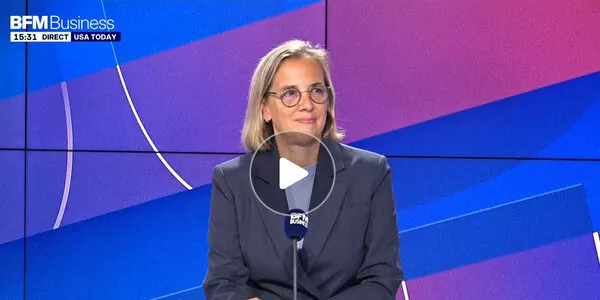
Clémentine Gallès on the program USA Today - BFM Business - 16/09/2026

After several years marked by rising interest rates and slower transaction activity, residential real estate is...
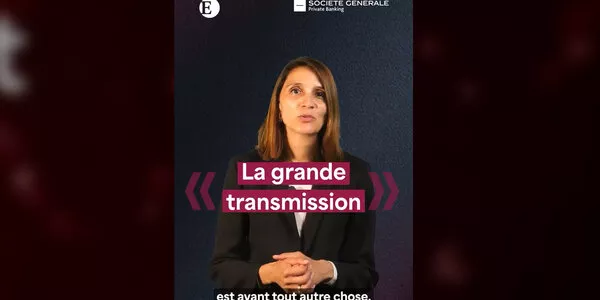
Samia Yakoubi sur Les Echos - La grande transmission

Preserving a company’s independence while giving its succession a philanthropic dimension: this is the ambition behind...