Wine crisis: a deep-rooted challenge reshaping vineyard assets
A lasting decline in wine consumption
Global wine consumption fell to approximately 208 million hectolitres in 2025, representing a decline of nearly 14% since 2018. Consumption has reached its lowest level since the 1950s, following a continuous decrease over more than sixty years.
France, Europe’s largest wine market, with around 22 million hectolitres consumed, has not escaped this trend. Younger generations consume wine less regularly, while beer, cocktails and alcohol-free beverages continue to gain ground.
Not all segments are affected in the same way, however. High-volume red wines are the most exposed, which helps explain the difficulties experienced in Bordeaux and Languedoc. By contrast, white, sparkling and rosé wines have proved significantly more resilient, with some segments continuing to gain market share.
This trend is forcing industry to rethink part of its offering, going well beyond a simple cyclical adjustment of production volumes.
Exports: an increasingly complex environment
Declining demand is being accompanied by increased international competition. Spain, Italy, Chile and Australia are competing in a shrinking global market, sometimes benefiting from production costs significantly lower than those of French wine estates. Competition is also taking place on the quality front, as most major wine-producing regions around the world are now capable of producing wines that meet consumer expectations.
Trade tensions represent a second source of pressure. Since August 2025, the United States, a strategic market for French wines and spirits, has imposed 15% tariffs on European wines. Combined with currency movements, this environment has significantly increased the price of French wines for American consumers.
In China, trade tensions have also affected French spirits, particularly Cognac, with purchases declining markedly.
In 2025, French wine and spirits exports fell by 8%, reaching €14.3 billion. Sales to the United States declined by 21%.
A particularly severe squeeze effect
For many wine estates, the challenge now lies in the widening gap between selling prices and production costs. In addition to commercial pressures, producers are also facing higher energy, glass and labour costs, as well as the consequences of frost, hail and drought.
The result is a squeeze effect: production is becoming more expensive while market conditions do not always allow these increases to be passed on through prices. In this context, access to financing has become an issue in itself. Some banks are reducing working capital facilities or taking a more cautious approach to inventory financing. In the Bordeaux region, around 1,200 estates are reportedly engaged in discussions regarding their debt levels.
Vineyard land at the heart of the adjustment
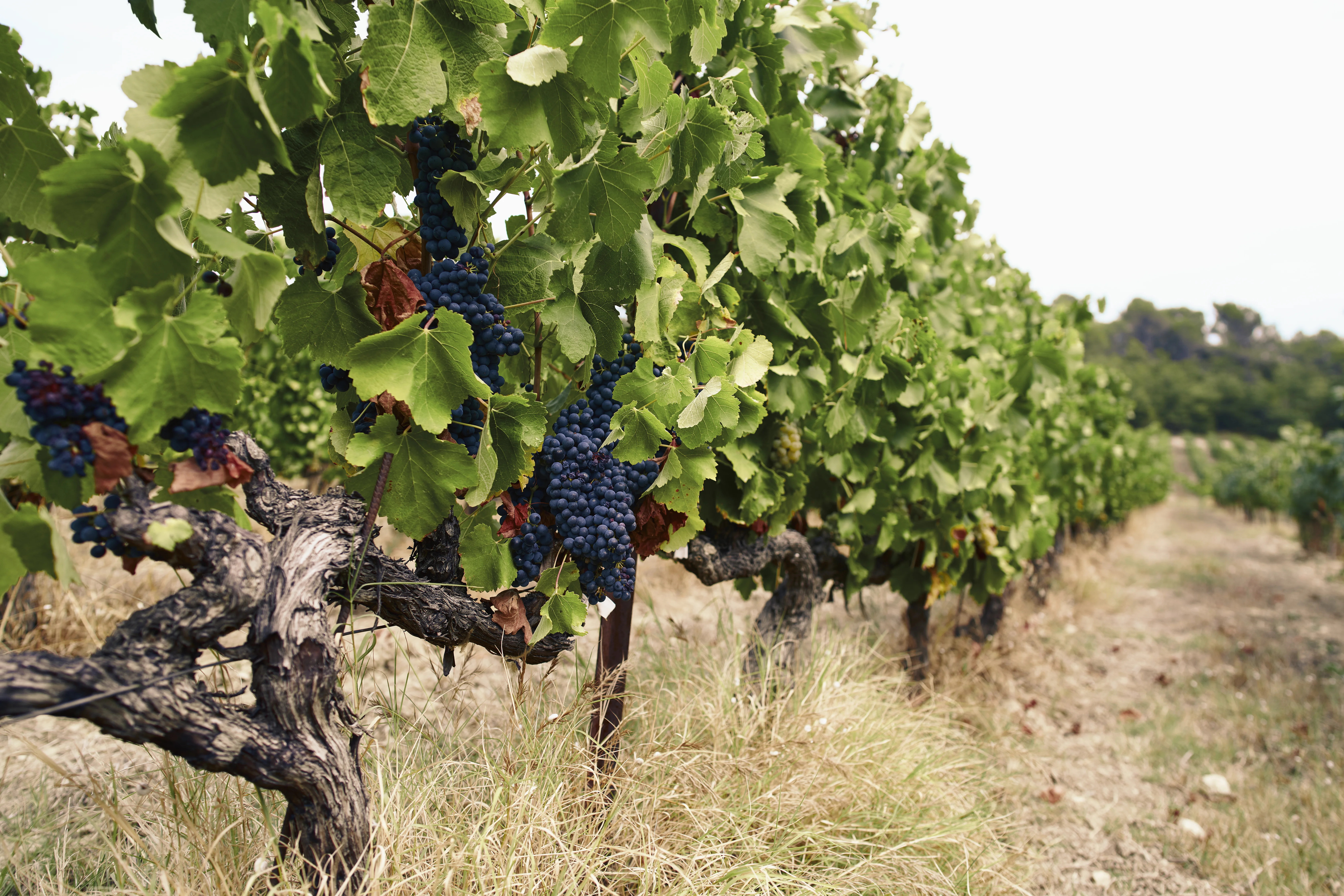
This decline in activity is naturally affecting the market for vineyard properties. In the Bordeaux region, the annual value of vineyard transactions fell sharply, from approximately €343 million in 2022 to €96 million in 2025. Over the same period, the average price of one hectare of Bordeaux AOC vineyard land fell to around €6,500.
The number of insolvency proceedings is also rising. In the first quarter of 2026, 87 wine estates entered insolvency proceedings, around half of them located in the Gironde department.
These figures illustrate an essential reality for investors: behind the vineyard market lie highly diverse situations. An estate producing mainly high-volume wines does not offer the same value-creation prospects or resilience as a property benefiting from a recognised brand, a strong distribution network, wine tourism potential or scarce vineyard land.
The general decline in prices may therefore create opportunities, but it also requires a much higher degree of selectivity than in the past.
Pulling up vines today, transforming tomorrow
In the short term, public authorities are primarily seeking to rebalance the market by reducing excess production. Following an initial vine-pull scheme, a new €130 million programme provides for the removal of nearly 28,000 hectares of vineyards, mainly planted with red grape varieties. Distillation measures have also been introduced to help reduce accumulated inventories.
While these actions may contribute to a better balance between supply and demand, they do not address the central issue: consumption. The industry's ability to adapt will therefore be decisive.
This transformation will notably involve the development of white, rosé and sparkling wines, the growth of alcohol-free wines, diversification of export markets, the expansion of wine tourism and, in some cases, the partial conversion of wine estates to alternative activities.
A crisis that could lastingly reshape the vineyard landscape
France is not an isolated case. Globally, vineyard acreage has been declining for several years, and wine consumption in the United States, the world's largest wine market, also fell in 2025. The current crisis could therefore accelerate a profound restructuring of the sector.
In this new environment, not all estates will be affected in the same way. Those benefiting from strong brand recognition, exceptional terroir and well-managed distribution channels are likely to demonstrate greater resilience. Conversely, estates that depend primarily on volume production will need to continue pursuing cost reductions, differentiation and diversification strategies.
For current owners and prospective investors in vineyard assets, this period calls for a careful assessment of fundamentals rather than a uniform view of the market. The quality of the terroir, level of indebtedness, profitability, brand strength, real estate and tourism potential, and diversification opportunities have all become key considerations.
French winegrowing is likely to emerge from this crisis more concentrated and probably more segmented. As is often the case during periods of market restructuring, the general decline in valuations may reveal genuine wealth-planning opportunities alongside assets facing more persistent challenges.
Article by Matthieu Gombault, Head of Wine & Forest Expertise at Societe Generale Private Banking
Sources:
OIV, FEVS, FranceAgriMer, Safer, CIVB and specialised industry publications.
This content, being of an advertising nature, has no contractual value. It is neither intended to provide an investment service such as investment advice, nor any related investment service, nor advice on arbitrage, nor legal, accounting, or tax advice from Société Générale Private Banking France (hereinafter "SGPB France"), which therefore cannot be held responsible for any decision made by an investor solely based on its content. SGPB France does not undertake to update or modify it.
Before making any investment decision, please review the detailed documentation of the service or product considered, notably the information related to associated risks, and consult your legal and tax advisors. If the content is accessed by a non-French tax resident, they must ensure with their legal and tax advisors that they comply with the legal and regulatory provisions of the relevant jurisdiction. It is not intended to be distributed in the United States, nor to a US tax resident, nor to any person or in any jurisdiction where such distribution would be restricted or illegal.
Société Générale has implemented a conflict of interest management policy. Société Générale Private Banking France has put in place (i) a complaints handling policy for its clients, available upon request from their Private Banker or on its website (https://www.privatebanking.societegenerale.com/en/claims/) and (ii) a personal data protection policy (https://www.privatebanking.societegenerale.com/en/personal-data-protection/). At any time and free of charge, you have the right to access, rectify, restrict processing, erase your data, and object to its use for commercial prospecting purposes by contacting our Data Protection Officer by email (protectiondesdonnees@societegenerale.fr). In case of dispute, you may file a complaint with the French Data Protection Authority (CNIL), the supervisory authority responsible for ensuring compliance with personal data obligations.
This document is issued by Société Générale, a French bank authorized and supervised by the Autorité de Contrôle Prudentiel et de Résolution, located at 4 Place de Budapest, 75436 Paris Cedex 09, under the prudential supervision of the European Central Bank ("ECB") and registered with ORIAS as an insurance intermediary under number 07 022 493, orias.fr. Société Générale is a French public limited company with a share capital of EUR 939,654,993.75 as of 23 February 2026, whose registered office is located at 29 boulevard Haussmann, 75009 Paris, and whose unique identification number is 552 120 222 R.C.S. Paris (ADEME FR231725_01YSGB). More details are available upon request or on www.privatebanking.societegenerale.com/. This content may not be communicated or reproduced in whole or in part without prior written consent from Société Générale Private Banking France.