
Weekly Update - The trade routes of artificial intelligence
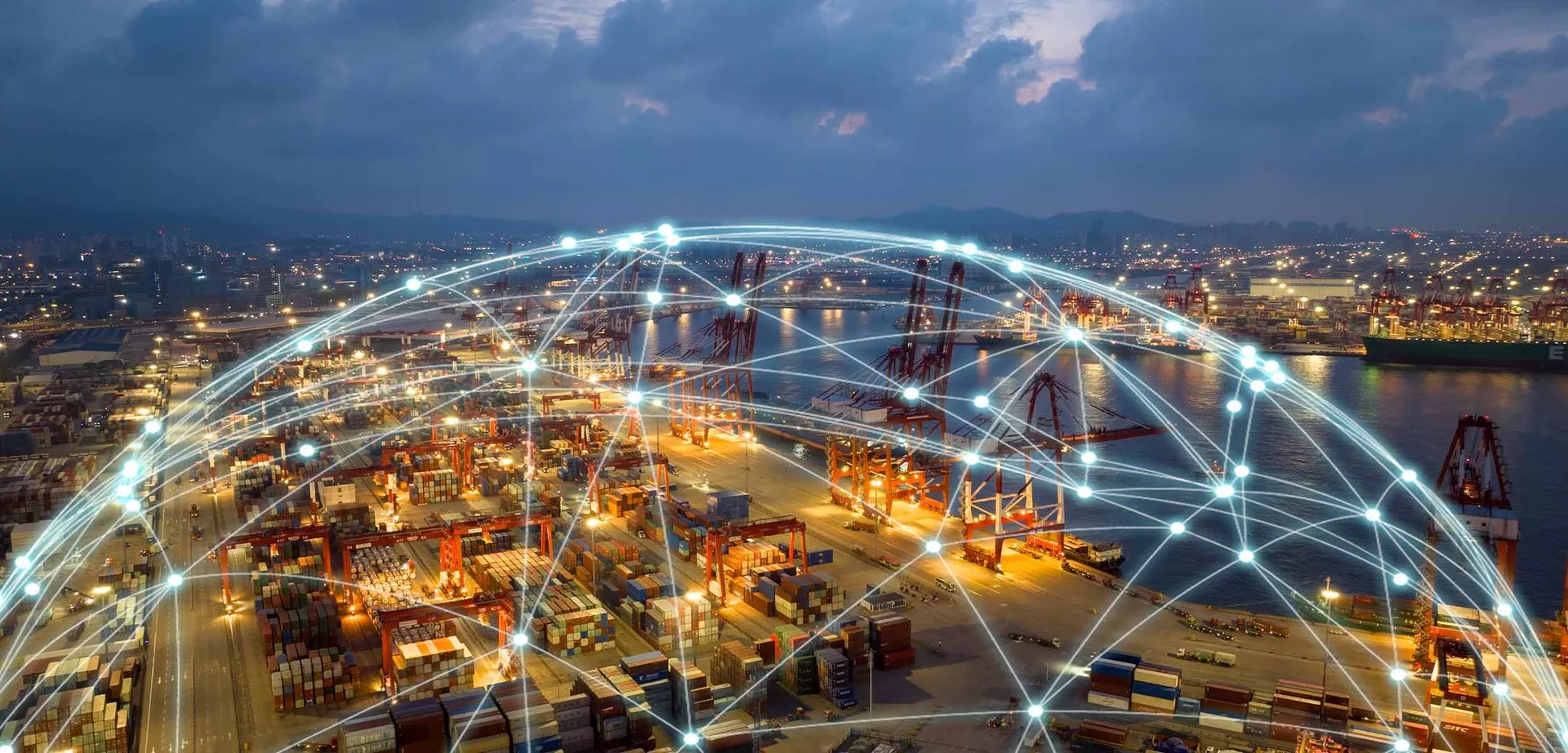
Despite the multiplication of protectionist policies in major economies, global trade continues to display very strong growth. This resilience largely reflects the expansion of the artificial intelligence ecosystem accompanied by announcements of massive investments. Indeed, in the United States, these very significant investments are translating into a strong increase in imports of IT goods, keeping the trade deficit at a high level. At the same time, exports of goods from advanced Asian economies, the main suppliers of IT goods, are also showing a strong increase, while Chinese exports remain resilient.
International trade challenged by protectionist policies. In a context where major economies are implementing a growing number of protectionist measures and strengthening their industrial policies, international trade is showing strong resilience. After an increase of 4% in volume in 2025, it continues on this trend with growth of 8% in February, thus reaching a historical level. From a geographical perspective, this strength reflects the dynamism of Asian exports: those of China have increased by 30% since 2025, compared to 24% for advanced Asian economies (Korea, Taiwan) and 16% for emerging Asian economies (ASEAN). By comparison, U.S. exports have increased by 15% over the same period, while those of the euro area have declined by 2%.
The dynamism of Asian exports, reflecting the rise of AI. This dynamism is primarily explained by the importance of investments in the AI sector, the region being in a situation of near-monopoly over the production of hardware necessary for this technology. Thus, semiconductor exports from China, Korea and Taiwan reached nearly $700 billion on a yearly basis in March and should remain supported, given upcoming investment announcements. This combination of a dominant position and strong demand explains the outperformance of Korean and Taiwanese equity indices, up by 86% and 42% respectively since the beginning of the year. Moreover, Chinese exports remain dynamic (8% year-on-year in April), despite the strengthening of protectionist measures adopted by several economies against Chinese goods. They continue to benefit from increased competitiveness, excess production capacities, as well as specialization in goods linked to the energy transition, in a context of rising oil prices.
A still large U.S. trade deficit, reflecting the rise of AI. As a counterpart to the surge in Asian semiconductor exports, the U.S. trade deficit remains high. In March, it stood at $1,020 billion, most of which comes from imports of IT equipment ($769 billion over one year). In addition, this category of goods benefits from very low tariffs. Excluding this category, the deficit has adjusted more markedly. Thus, while the investments announced by U.S. companies support growth, they also contribute to maintaining a high trade deficit, increasing global imbalances.

By Clémentine Gallès Chief Economist and Strategist Societe Generale Private Banking and Juan Carlos Mendoza Diaz...

By Clémentine Gallès Chief Economist and Strategist Societe Generale Private Banking and Juan Carlos Mendoza Diaz...

By Clémentine Gallès Chief Economist and Strategist Societe Generale Private Banking and Juan Carlos Mendoza Diaz...

By Clémentine Gallès Chief Economist and Strategist Societe Generale Private Banking and Juan Carlos Mendoza Diaz...

By Clémentine Gallès Chief Economist and Strategist Societe Generale Private Banking and Juan Carlos Mendoza Diaz...