
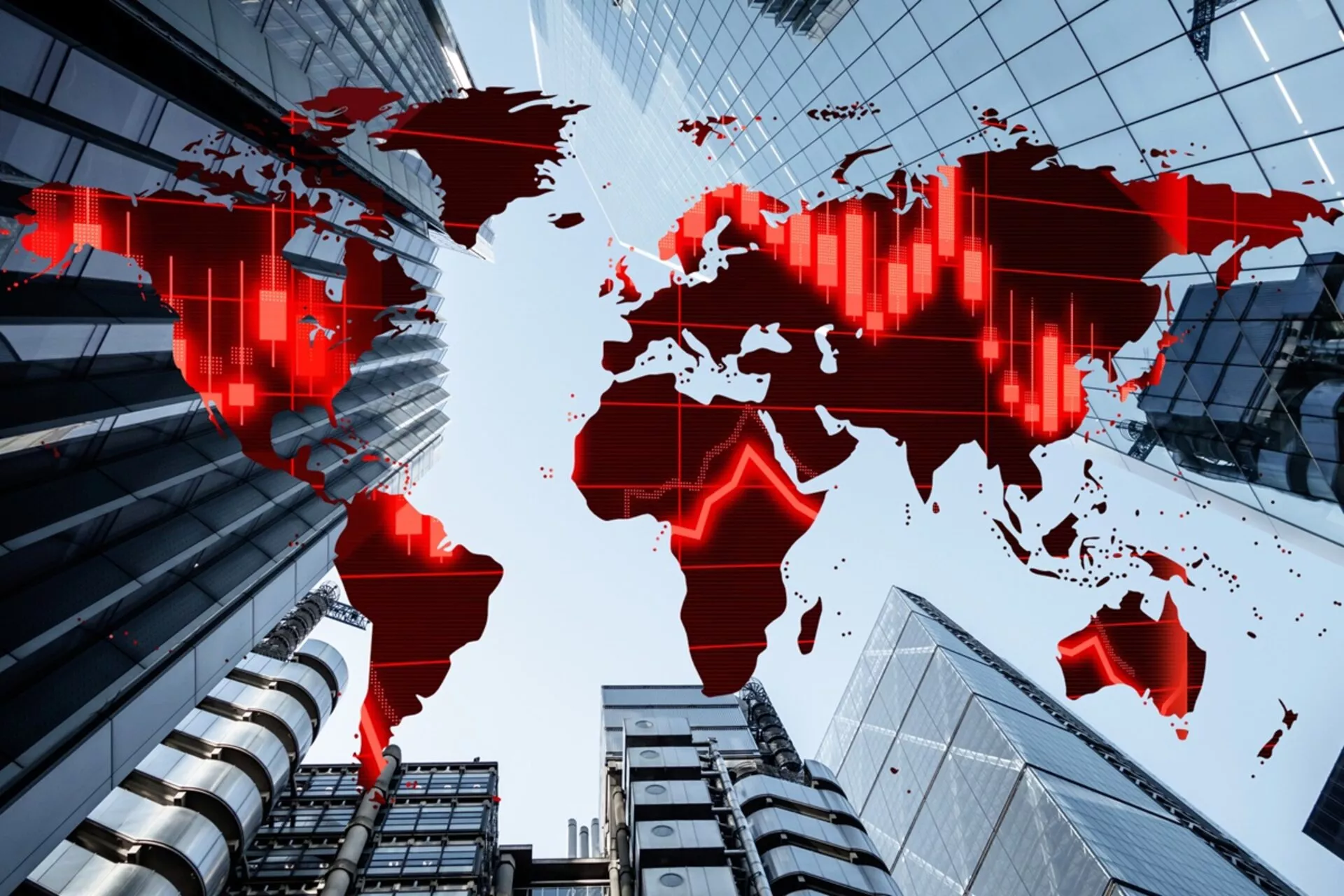
Weekly Update - Behind geopolitical tensions, the issue of macroeconomic imbalances
As the geopolitical environment has once again become highly strained, the International Monetary Fund (IMF) is observing a resurgence of global macroeconomic imbalances. Far from being a secondary phenomenon, these imbalances reflect increasingly divergent trade and financial trajectories among the major economies. They directly fuel political and geopolitical tensions and increase the risk that future exogenous shocks will be more difficult to absorb.
A renewed widening of global imbalances is being observed, after a decade of gradual reduction following the 2008–2009 global financial crisis. This trend is reflected in the simultaneous widening of current account surpluses and deficits across major economic regions. The IMF views this development as a cause for concern, as history shows that periods of large imbalances are often associated with weakened growth, or even with financial crises or sudden stops in capital flows.
As highlighted by the IMF, these imbalances are not solely a trade related phenomenon. They primarily reflect a persistent misalignment between saving and investment, that is, domestic macroeconomic choices whose consequences spread across the global economy.
China provides a striking illustration. The Chinese economy remains characterized by a structurally low level of domestic consumption, linked to a still incomplete social protection system, the real estate crisis, and public incentives that remain strongly geared toward productive and industrial investment.
By contrast, the United States is characterized by persistently excessive public deficits. Since the COVID crisis, U.S. public finances have recorded historically high deficits. This trajectory contributes to a structural current account deficit and increases financial vulnerabilities in an environment of higher real interest rates. In an international monetary system dominated by the U.S. dollar, these imbalances do not remain domestic and are transmitted through global financial markets..
The European Union occupies an intermediate position, marked by a current account surplus that nonetheless masks a structural weakness. Europe suffers from underinvestment in high productivity sectors, critical technologies, and long term capital. This surplus reflects less an outperformance than an investment shortfall, which weighs on growth potential and weakens the continent’s ability to absorb geopolitical, energy, and technological shocks.
The risk of a self reinforcing dynamic: macroeconomic imbalances fuel geopolitical fragmentation, while this fragmentation in turn exacerbates imbalances by encouraging national retrenchment. Unilateral responses—whether in the form of protectionism, subsidies, or defensive industrial policies—deliver short term political gains but aggravate medium term vulnerabilities. Thus, current geopolitical tensions appear more as revealing factors than as triggering ones. They are rooted in persistent macroeconomic imbalances arising from divergent national trajectories and insufficient international coordination. The IMF advocates a coordinated macroeconomic rebalancing between deficit and surplus economies in order to limit risks.
By Clémentine Gallès Chief Economist and Strategist Societe Generale Private Banking and Juan Carlos Mendoza Diaz...
By Clémentine Gallès Chief Economist and Strategist Societe Generale Private Banking and Juan Carlos Mendoza Diaz...
By Clémentine Gallès Chief Economist and Strategist Societe Generale Private Banking and Juan Carlos Mendoza Diaz...
By Clémentine Gallès Chief Economist and Strategist Societe Generale Private Banking and Juan Carlos Mendoza Diaz...