

Precision Agriculture: Cultivating the Future
Doing better with less: this is the motto of precision agriculture, a farming management method aimed at optimizing production while preserving the environment, supported by the most innovative tools.
On one side, a population to feed that is expected to reach 9.6 billion people by 2050 according to the UN. On the other, the agricultural sector, which accounts for nearly a quarter of global greenhouse gas emissions according to the IPCC. Faced with this dilemma, a promising solution emerges: precision agriculture. The principle is simple: to use all available technological advances to optimize agricultural production processes and thus manage crops efficiently, sustainably, and responsibly.
Technology, the Best Ally of Agriculture
To achieve this, the arsenal of technologies available to farmers is impressive: GPS, satellites, drones, smart sensors, AI-powered analysis platforms… All these tools share the same goal: to collect data, analyze it, and use it to improve the efficiency, productivity, and thus profitability of farms, while preserving resources as much as possible.
Thanks to data collected by studying the condition of plants, soil, and even the weather, farmers can precisely understand the needs of their crops and respond with accuracy, optimizing the use of water, energy, and inputs. This approach offers many advantages. First, the rational use of resources reduces production costs, improving yields and profitability. Second, the reduction of chemical inputs and optimized irrigation preserve the environment. Finally, the data gathered during production provides consumers with flawless traceability of agricultural products. The added value is tangible: precision agriculture could increase yields by 5 to 10%, while reducing the consumption of fertilizers and phytosanitary products by 15 to 20%.
A Promising Sector
All these benefits illustrate the strong potential of this sector. According to a Berg Insight report, the precision agriculture market is expected to grow from 5.5 to 9.5 billion euros between 2023 and 2028. Based on this observation, many startups are developing in the "AgriTech" field. In early May 2025, the English startup Gardin raised 4.5 million dollars. Thanks to an optical sensor capable of measuring plant photosynthesis in real time and an associated artificial intelligence platform, Gardin offers farmers the ability to precisely adjust lighting or watering, achieving up to 15% additional yield and energy savings ranging from 20 to 30%. Meanwhile, Weenat, a startup based in Nantes, raised 8.5 million euros in April 2024. It notably offers probes that measure soil moisture in real time, helping farmers finely control their irrigation, maximizing yields while limiting water use.
In an era of climate disruption and resource scarcity, precision agriculture therefore stands as a future-oriented solution, as promising as it is necessary. The technological acceleration driven by AI promises rapid advances in agricultural practices, opening wide the field of possibilities.
AgriTech, Agriculture 2.0
After MarTech, FinTech, FoodTech… here comes AgriTech! This neologism, a contraction of the words agriculture and technology, encompasses all the players who use new technologies to improve their production.

The French real estate market is undergoing a major transition phase. Rising interest rates, new regulatory...

There are many benefits to using life insurance to manage your wealth. Let’s take a look at how this powerful savings...
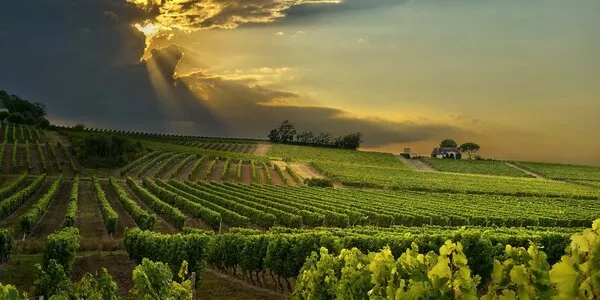
Climate disruptions are redrawing the global map of wine-growing regions.