
Shareholder foundations: passing on a business in the service of the common good

Preserving a company’s independence while giving its succession a philanthropic dimension: this is the ambition behind the shareholder foundation model. Already widely established in several Northern European countries, this approach is attracting growing interest in France among entrepreneurs who wish to anchor their businesses in a long-term vision.
Virginie Seghers, President of Prophil and founder of the De Facto community, sheds light on the distinctive features of this model as it gains momentum in France.
What is a shareholder foundation?
A shareholder foundation(1) is a model for business succession, governance, and value sharing chosen by entrepreneurs seeking to reconcile the preservation of their company with a contribution to the common good. It is a generic term referring to a foundation, or a similar structure such as an endowment fund, which holds all or part of a company’s share capital through a transfer of ownership.
In practice, company founders, often together with their children, decide to transfer part or even all of their shares to a foundation (or an endowment fund). By doing so, they relinquish ownership of those shares so that the foundation can safeguard the company’s long-term future and independence.
Over the past decade, Prophil has played a key role in promoting this model in France through its research, advocacy, and strategic advisory activities, supporting many pioneering French entrepreneurs in adopting this approach.*
How do shareholder foundations reconcile a company’s long-term continuity with philanthropy?
The purpose of a shareholder foundation is to provide a company with a stable, long-term shareholder. By definition, a foundation belongs to no one and therefore cannot be bought out. It has no shareholders of its own. According to the work of leading European researchers, particularly in Northern European countries where this model has existed for more than a century, a shareholder foundation is also intended to become the company’s controlling shareholder. Its mission is to play a fundamental role in preserving the business and safeguarding the material and intangible values that form its unique identity.
Furthermore, under French law, every foundation (or endowment fund) pursues a purpose that serves the public interest. Through the dividends it receives, as well as other sources of funding such as gifts, donations, and bequests, the foundation can carry out a philanthropic strategy, often with significantly greater resources than those available to a traditional foundation, while maintaining a long-term perspective.
As a result, all members of our De Facto community, which brings together French entrepreneurs who have pioneered this model, pursue a dual mission through their shareholder foundations: stewarding the company as a long-term shareholder while advancing philanthropic initiatives. Examples include Léa Nature, Monin, Archimbaud, Bureau Vallée, KS Group, CETIH, Palais des Thés, and Le Monde, among others.
This model is particularly well established in Northern Europe, but much less so in France. What explains this significant disparity between these countries, and what, in your view, are the prospects for shareholder foundations in France?
We recently published a comprehensive two-volume study(2), “Shareholder foundations are taking root in France,” dedicated to this topic. The figures are striking, and the differences are significant. There are more than 1,400 shareholder foundations in Denmark, over 1,000 in Germany, and more than 200 in Switzerland. By way of example, international groups such as Carlsberg, Novo Nordisk, Bosch, Bertelsmann, and Carl Zeiss are controlled by shareholder foundations.
In summary, the main barriers in France are primarily cultural, but they also stem from inheritance law, particularly the principle of forced heirship (réserve héréditaire). Additional legal and tax challenges remain, especially when the shares being transferred are held through a holding company. These issues are addressed through the recommendations set out in our study and through ongoing advocacy efforts with public authorities.
We are nevertheless optimistic about the future of shareholder foundations in France. The First Shareholder Foundations Forum, held on 9 June at the French Ministry of the Economy and Finance, brought together more than 400 participants, including over 100 entrepreneurs, leading European experts, and representatives from the main professional networks concerned. Such a level of engagement, which would have been difficult to imagine just a few years ago, demonstrates that at a time of the “great wealth transfer”, and in the face of pressing social and environmental challenges, the shareholder foundation model can provide a highly relevant and forward-looking solution.
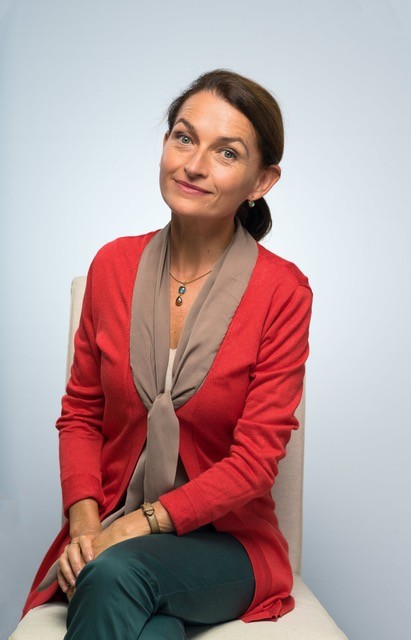
Virginie Seghers
Virginie Seghers is President of Prophil, an independent mission-driven strategy consulting and research firm dedicated to helping businesses contribute to the common good. Since its creation in 2013, Prophil has supported more than 250 companies in their transformation journeys.
Virginie is also the founder of the De Facto community (European Initiative for Shareholder Foundations), which brings together French pioneers and leading European experts in this model of business succession and value sharing.
© all rights reserved
Sources
(1) For greater clarity, we do not consider as a “shareholder foundation” the result of a foundation spinning off commercial activities into a subsidiary, nor the holding of company shares by a foundation as part of its financial investment policy, nor shares held by a foundation through a temporary usufruct donation arrangement.
(2) “Shareholder Foundations Are Taking Root in France”, published by Prophil in partnership with its De Facto community, Prophil Editions, June 2026. Available at: https://prophil.eu/publications/ .
DISCLAIMER
This document has no contractual value. It is not intended to provide an investment service such as investment advice, a related investment service, arbitration advice or legal, accounting or tax advice from Société Générale Private Banking France (‘SGPB France’), which cannot therefore be held liable for any decision taken by an investor solely on the basis of its content. SGPB France undertakes neither to update nor to modify it.
Before making any investment decision, please review the details of the documentation for the service or product being considered, including any associated risks, and consult your legal and tax advice. If the document is consulted by a French tax non-resident, he or she will have to ensure with his or her legal and tax advisors that he or she complies with the legal and regulatory provisions of the jurisdiction concerned. It is not intended for distribution in the United States, or to a U.S. tax resident, or to any person or jurisdiction for which such distribution would be restricted or unlawful.
The past performance information that may be reproduced is not intended to guarantee future performance. These future performances are therefore indicative. The return to investors will vary depending on market performance and the shelf life of the investment. Future performance may be subject to tax, which depends on your present and future personal situation.
Societe Generale has put in place a policy to manage conflicts of interest. SGPB France has put in place (i) a policy to handle complaints made by its customers, available on request from your private banker or on its website and (ii) a policy to protect personal data (https://www.privatebanking.societegenerale.com/fr/protection-donnees-personnelles/). At any time and without charge, you have the right to access, rectify, limit processing, erase your data and the right to object to their use for the purposes of commercial prospecting by contacting our Data Protection Officer by email (protectiondesdonnees@societegenerale.fr). In the event of a dispute, you can lodge a complaint with the Commission Nationale de l’Informatique et des Libertés (CNIL), the supervisory authority responsible for compliance with personal data obligations.

No matter where you spent your summer holidays or when you took them, chances are you had the opportunity to enjoy the...
Clémentine Gallès on the program USA Today - BFM Business - 16/09/2026

After several years marked by rising interest rates and slower transaction activity, residential real estate is...
Samia Yakoubi sur Les Echos - La grande transmission